Health and Safety Policy — House Clearance Leatherhead
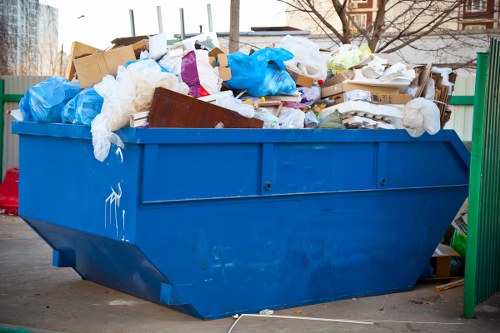 Policy statement: This document sets out the health and safety policy for the house clearance and rubbish removal operations carried out across our service area. It applies to all staff, contractors and sub-contractors engaged in House Clearance Leatherhead activities and related waste clearance tasks. The aim is to protect people, property and the environment by managing hazards effectively and ensuring compliance with applicable law and industry standards. This policy is intended for use as a legal and operational reference rather than promotional material.
Scope and responsibilities: The policy covers domestic and commercial rubbish removal Leatherhead work, vehicle transport, manual handling, storage and disposal of waste types encountered during house clearances, and on-site segregation of recyclable materials. Senior management retain ultimate responsibility for implementation; supervisors and operatives share day-to-day duties. Everyone must cooperate to maintain a safe workplace. Employees must follow safe systems of work, attend training and report hazards promptly.
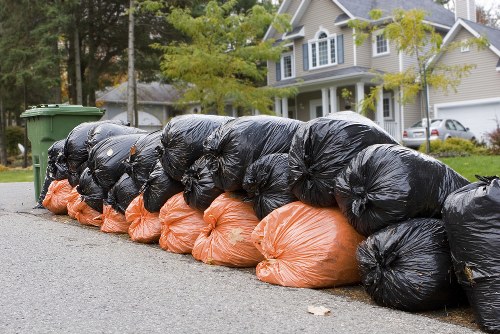 Risk assessment and control: Formal risk assessments shall be carried out before each clearance or collection. Identified risks — including unstable structures, trip hazards, sharp objects, contaminated materials, electrical hazards and chemical substances — will be recorded and mitigated. Controls include safe work procedures, use of appropriate personal protective equipment (PPE), clear exclusion zones and, where necessary, specialist removal for hazardous items. The approach follows the hierarchy of controls: elimination, substitution, engineering, administrative controls and PPE.
Safe Working Practices and Training
Competence and training: All staff performing Leatherhead house clearance duties will receive induction, job-specific training and regular refresher instruction. Training covers manual handling techniques, correct use of tools and equipment, vehicle loading and securement, lone working safeguards and identification of hazardous waste. Training records will be maintained. Managers will ensure personnel are assessed as competent before undertaking unsupervised work.
 PPE and equipment: Required PPE includes gloves, hi‑vis clothing, safety boots, eye protection and respiratory protection where dust or biohazards are present. Equipment such as trolleys, sack trucks, powered lifting aids and secure containment for sharps and hazardous materials will be provided and maintained. All equipment must be inspected prior to use and taken out of service if defective.
Manual handling and ergonomics: Manual handling risk is reduced by mechanical aids, team lifts, and load evaluation. Job planning includes breaking tasks into manageable steps, rotating duties to limit repetitive strain, and ensuring adequate lighting and clear access routes. Supervisors must record lifting plans for heavy or irregular loads and use safe lifting techniques at all times.
Hazardous Materials, Vehicles and Environmental Controls
Hazardous waste and sharps: Specific procedures exist for handling asbestos, chemicals, biological contamination, batteries, paints and sharps. Items suspected to contain asbestos or other regulated hazardous substances will be isolated and referred to licensed specialists. Sharps and clinical waste will be double-bagged or placed in rigid containers clearly labelled and handled only by trained staff. The policy emphasises that no operative should attempt licensed hazardous removals without authorization.
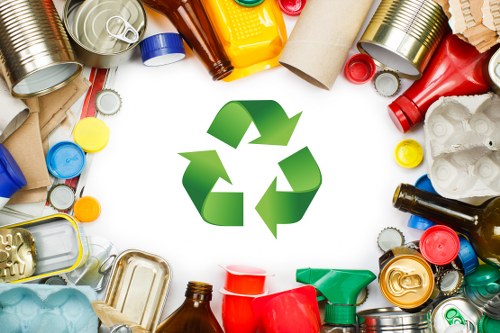
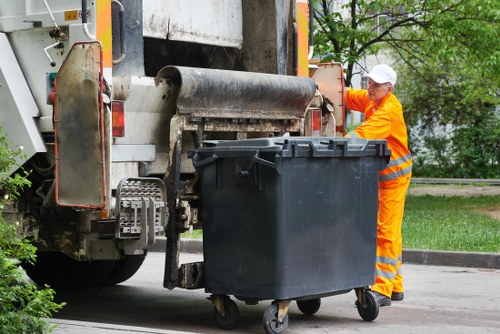 Vehicle safety and site segregation: All vehicles used for house clearances and waste collection must be serviced and checked daily. Loads must be secured to prevent shifting and spillage during transit. Waste segregation procedures will separate recyclable material, general refuse and hazardous items to minimise environmental harm. Drivers and crews will follow permitted routes, observe local traffic regulations and exercise caution when accessing confined driveways or narrow lanes.
 Controls and monitoring: The following control measures will be implemented and reviewed regularly:
- Pre-task risk assessments and method statements for complex jobs
- Mandatory PPE and tool checks before each shift
- Incident and near-miss reporting with corrective action tracking
- Scheduled vehicle and equipment maintenance
- Waste transfer documentation and appropriate disposal routes
Incident reporting and first aid: All incidents, however minor, must be reported and recorded. Investigations will identify root causes and remedial measures. Adequate first aid provision will be available at operational bases and crews will have access to first aid kits in vehicles. Where medical attention is required, staff will ensure prompt and safe transport to healthcare providers; records of workplace injuries will be maintained in accordance with statutory obligations.
Welfare and lone working: Crews operating within the rubbish company service area should have access to welfare facilities, rest breaks and hydration. Lone working procedures include check‑in systems, mobile communication equipment and risk assessments tailored to isolated tasks. Supervisors must ensure that lone workers are trained in personal safety and know how to summon assistance.
Performance review and compliance: Management will undertake regular audits, inspections and competency checks to measure compliance with this policy. Policy reviews will occur at least annually or after a significant incident or regulatory change. Non‑compliance may lead to disciplinary action. This health and safety policy supports responsible delivery of Leatherhead house clearance services while protecting workers, clients and the environment.
Policy endorsement: This policy is endorsed by senior management and forms part of the contractual and operational framework for all employees and contractors engaged in house clearances and waste removal. It complements statutory legislation and industry best practice and is intended to be applied consistently across all work locations within our rubbish removal and waste clearance operations.
Review date and responsibility: The policy will be reviewed periodically to ensure effectiveness. Operational managers are responsible for implementation, staff are responsible for adherence, and the company is responsible for providing resources and oversight to maintain safe systems of work for all Leatherhead house clearance activities.
Signed and authorised: The health and safety policy remains a live document; supervisors and employees must familiarise themselves with its provisions and ensure day-to-day work reflects these safety standards. Adherence protects people, property and the wider community while enabling professional and compliant waste clearance services.
